Techno Clubs in Bucharest: A Guide to the City's Electronic Scene
Updated 6 min read Mary Kaynelidi
Techno clubs in Bucharest concentrate around a handful of rooms rather than a single district, and the city's reputation for minimal, percussive house comes from how those rooms are programmed. Control Club, the open-air Platforma Wolff, Club Guesthouse and Nether carry most of the weekly calendar, while larger spaces like Arenele Romane and Laminor Arena take over once summer pushes the season outdoors. Across the events Mood is currently tracking in Bucharest, danceability averages 0.77 on a 0-1 scale, which is what a room full of stripped-back grooves looks like in data.
The Romanian minimal sound is the reason international diggers keep routing through here. It is slower, more hypnotic and more rhythm-led than the big-room techno of Berlin or Amsterdam, built on long all-night sets rather than back-to-back headliners. That preference shows up on the bills below, where single-artist all-nighters appear as often as multi-DJ line-ups.
Control Club: the centre of the week
Control Club opened in December 2010 in central Bucharest and has spent more than fifteen years moving from an indie live room toward electronic programming, without ever choosing one over the other. A single week can hold a disco party, an experimental DJ set and a house night, which is why it functions as the scene's default meeting point rather than a genre specialist. In Mood's data, Control's nights average 0.78 danceability and 0.45 grit, the most balanced profile of any recurring venue in the set, sitting between the festival stages and the harder open-airs.
What sets Control apart is not the sound but the curation logic: it runs as an experimentation lab for local producers and visiting selectors, with series like Corp.cast and the Public Possession label night sharing the same small room. The honest caveat is scale. This is a compact club, not a warehouse, so the bigger international names tend to land at other venues, and a quiet midweek date can feel closer to a listening session than a rave.
Platforma Wolff and the open-air core
Platforma Wolff is an open-air DJ bar built inside a disused late-19th-century factory on Doctor Constantin Istrati Street, part of the Expirat group, and it only runs through the warm months. That seasonality matters for planning: the venue is effectively dark in winter and comes alive from late spring, with parties typically running 22:00 to 06:00. It carries the highest danceability of any venue Mood tracks in Bucharest at 0.88, alongside a grit reading of 0.56, the raw, low-glamour profile its warehouse acoustics would suggest.
The booking leans toward the international minimal and tech-house circuit. DJ Koolt, the Uruguayan co-founder of Montevideo's Phonotheque and mentor to Nicolas Lutz, plays an all-night set at Platforma Wolff alongside local selector Dragoș Ilici, a billing built for the long-form, percussive style the room is known for. Later in the month the Flipside day-to-night party brings Magda to Platforma Wolff; the M_nus and Items & Things co-founder, Polish-born and Berlin-shaped, is one of minimal techno's longest-standing names. Both nights read 0.6 grit, above the 0.45 set average.
Club Guesthouse, Nether and the harder rooms
Club Guesthouse is among the busiest rooms in the data, tied near the top of the venue count, and it sits firmly in the late-night club tier rather than the bar-and-music format Platforma Wolff occupies. Nether runs in the same lane, hosting techno and progressive-house line-ups including queer-led nights like the MILK Circuit Pride edition, which Mood logs at 0.8 energy. These are the rooms to read when the question is how hard a given week leans, since their bills tilt toward minimal techno and electro rather than the disco and house that soften Control's calendar.
For visitors, the trade-off is information. Smaller club nights here are often announced late and promoted mainly through Facebook and Instagram, which is exactly the gap an aggregator closes. You can scan the city's techno nights in Bucharest in one list instead of tracking a dozen separate event pages.
The summer arena tier: Arenele Romane and Laminor Arena
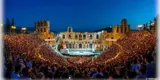
From July, the calendar shifts outdoors and up in scale. Arenele Romane is an open-air amphitheater in Carol Park, built in 1906 and holding roughly 5,000, and it carries the larger electronic and crossover shows once the season opens; its nights read 0.66 danceability in the data, lower than the clubs because the bills run toward concert acts rather than long DJ sets. Empire of the Sun's Ask That God tour stop is the kind of synth-driven, high-polish booking this stage takes, scoring 0.9 on the polish dimension Mood tracks.
Laminor Arena is the newer and far larger end of the spectrum, a converted industrial hall on Bulevardul Basarabia now run by the Dutch promoter ALDA, and it tops the venue count in the current data on the strength of arena-scale bookings. It has hosted Richie Hawtin, Jamie Jones and Boris Brejcha, which places it in a different bracket from the club rooms: this is where Bucharest puts the names that draw thousands, not the hundreds a basement holds. The qualifier is obvious - an arena rarely delivers the intimacy that makes the minimal scene worth the trip in the first place.
Frequently Asked Questions
What are the best techno clubs in Bucharest?
The core techno and electronic clubs in Bucharest are Control Club in the city centre, the open-air Platforma Wolff, Club Guesthouse and Nether. Larger electronic shows move to Arenele Romane and Laminor Arena in summer. Current dates for all of them are listed on Mood, the live-music discovery app.
Is Platforma Wolff open in winter?
No. Platforma Wolff is an open-air venue inside a former factory and runs only through the warmer months, roughly late spring into autumn, with parties usually from 22:00 to 06:00. In winter the Bucharest electronic calendar moves indoors to rooms like Control Club, Club Guesthouse and Nether.
What kind of techno does Bucharest play?
Bucharest is known for minimal and tech-house: slower, hypnotic and rhythm-led, often delivered as single-artist all-night sets rather than multi-DJ bills. The sound draws international diggers and connects to the wider Romanian minimal lineage, with house, electro and disco filling out the weekly programming.
When is the best time to visit for the club scene?
The season ramps from July, when open-air venues and the larger arenas come online and the international booking calendar peaks. Indoor clubs run year-round, so winter still works for the intimate end of the scene, but summer is when the outdoor rooms and festival-scale shows are active.
Bucharest rewards planning more than most club cities, because so much of the calendar lives in late social-media announcements rather than fixed listings. You can track the full run of electronic events in Bucharest on Mood and see the dates as they land.
Find events
electronic events in Bucharest