Paris keeps live jazz in small rooms rather than concert halls, spread across a handful of cellars and clubs that programme players most nights of the week. The best jazz clubs in Paris sit in two clusters - the historic trio on the Rue des Lombards in the 1st arrondissement, and a set of newer and outlying rooms across the Marais, the 13th and the Right Bank. In Mood's data the city's jazz listings average 0.63 on seating against a citywide 0.45, the platform's read on how much a room is built for sitting and listening rather than standing and dancing. That gap is the character of the scene: these are places you take a seat and watch the stand, not the floor.
The Rue des Lombards trio
The centre of jazz in Paris is one short street. The Rue des Lombards holds three clubs within a few doors of each other, and between them they carry most of the touring bookings that come through the city. Le Duc des Lombards, opened in 1984, runs nightly sets and late jams and is the most programmed of the three. A few numbers down, Le Baiser Salé leans toward fusion, French jazz and cross-cultural bookings, with a licence that lets the music run late - its July calendar includes the Olga Amelchenko Quintet's original project Before the Dawn, listed on Mood, a saxophone-led contemporary set. The third, Sunset/Sunside, is really two rooms under one roof: acoustic jazz upstairs, electric and world music in the basement, a split that lets it book both a straight-ahead trio and a spiritual-jazz project on the same night.
Sunset/Sunside opened in 1983 and has hosted the kind of names - Brad Mehldau, Richard Galliano, Jacky Terrasson - that mark a room out to serious listeners. This July it brings the Nduduzo Makhathini Trio to Paris, the South African pianist working in a spiritual-jazz idiom rooted in Zulu tradition. The three clubs are small, and that is the point of them; tables fill early and the sightlines are close, so booking ahead for a named act matters more here than the cover charge, which is modest by concert standards.
Caveau de la Huchette, the oldest room
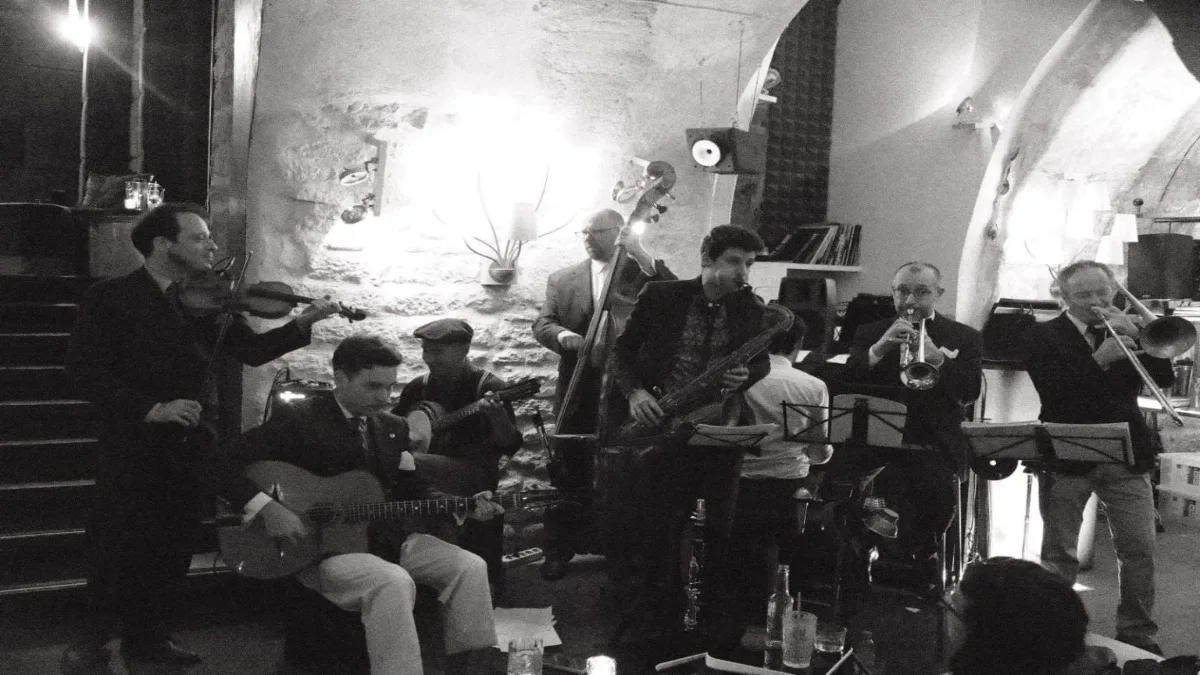
Across the river in the Latin Quarter, the Caveau de la Huchette is the oldest jazz club still running in the city. The building is a 16th-century stone cellar that became a jazz venue in 1949, and its earlier history - reputedly used by Freemasons and, during the Revolution, grim enough to earn the cellar its old nickname - is part of why the room feels the way it does. Since the late 1940s it has hosted Lionel Hampton, Count Basie and Art Blakey, and it is often called the birthplace of jazz in Paris. The Caveau leans toward swing and bebop with a dance floor below the vaults, which sets it apart from the seated listening rooms of the Lombards.
It is also the most touristed of the clubs, having appeared in films from the 1950s through to La La Land, and the crowd reflects that. What it trades on is atmosphere rather than the newest bookings - a working-band swing programme in a genuinely historic cellar. In Mood's data the city's jazz rooms average 0.52 on nostalgia against a citywide 0.42, and the Caveau sits at the leaning-back end of that: it is the room to choose for the history rather than the discovery.
New Morning, the larger Right Bank stage
Not every Paris jazz room is a cellar. New Morning, in the 10th arrondissement, opened in 1981 with a concert by Art Blakey and the Jazz Messengers and has since run through Chet Baker, Dizzy Gillespie and Stan Getz. With a capacity near 500 it is the larger room, and its programme reflects that reach - it books funk, soul and world acts alongside straight jazz. This July it hosts the veteran NYC collective Brooklyn Funk Essentials on Mood, whose acid-jazz and afrobeat blend is closer to a dancing bill than a seated set.
The scale is what separates New Morning from the Lombards clubs, and Mood's data reads it plainly: the platform logs New Morning near 0.5 on capacity against roughly 0.18 for the 38Riv cellar, one of the tightest rooms in the city. For a first-time visitor that difference is the choice between a standing-room show with a bar and an elbow-to-elbow cellar where the trumpet is a few feet away. Neither is better; they are different nights.
The newer and outlying rooms
The scene is not only the historic clubs. The 38Riv, founded in 2008 in a 13th-century vaulted cellar in the Marais, has become one of the busiest jazz rooms in Paris on the strength of near-nightly jam sessions - jazz, funk and Brazilian nights that draw developing players as much as audiences. It runs one of the densest calendars in the city, and its July bookings include trumpeter Milena Casado's debut album at the 38Riv, a soul-jazz project. The room seats about thirty; it is intimate to the point of being cramped, which is why regulars treat the jam sessions as the real draw.
Further out, JASS Club in the 13th arrondissement programmes concerts, jam sessions and tribute nights across the week, from hard bop to New Orleans jazz. Between the Lombards trio, the Caveau, New Morning and these newer rooms, the choice comes down to what kind of night you want: a named touring act on the Lombards, a historic swing floor at the Caveau, a larger funk-leaning bill at New Morning, or a jam session in a tight cellar at the 38Riv. The full spread of what is on any given week sits on Mood's Paris events listings.
Frequently Asked Questions
Where is the best live jazz in Paris?
The Rue des Lombards in the 1st arrondissement holds the three clubs most jazz visitors start with - Le Duc des Lombards, Le Baiser Salé and Sunset/Sunside - which carry the bulk of the touring bookings. For history, the Caveau de la Huchette is the oldest room; for a larger stage, New Morning; for jam sessions, the 38Riv. The right club depends on whether you want a named act, a dance floor or a session.
Do Paris jazz clubs have a cover charge?
Most of the dedicated rooms charge an entry fee that varies by act, generally modest compared with concert-hall tickets, and drinks are separate. The rooms are small, so tables and seats fill early for named bookings. Checking the specific night ahead is worth it - you can see which acts are playing which room on Mood's Paris listings.
Is the Caveau de la Huchette worth visiting?
The Caveau is the oldest jazz cellar in Paris and among the most atmospheric, with a swing programme and a dance floor beneath 16th-century stone. It is also the most touristed, so it trades on history and setting rather than the newest bookings. For discovery over atmosphere, the Lombards clubs or the 38Riv are the stronger picks.
Are the Paris jazz clubs small?
Most are. In Mood's data the city's jazz rooms average well below the citywide figure on capacity, and cellars like the 38Riv seat only around thirty people. New Morning, near a 500-person capacity, is the notable exception - a larger Right Bank stage. The intimacy is the trade-off that makes these rooms worth the early arrival.
Paris rewards anyone who picks the room before the act - a cellar on the Lombards and a stage at New Morning are two different nights of the same music. The full week of what is playing where, with dates and lineups, lives on Mood's Paris events page.