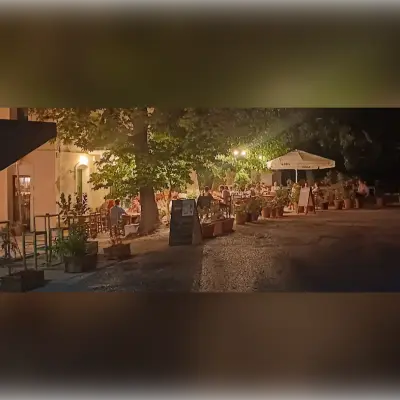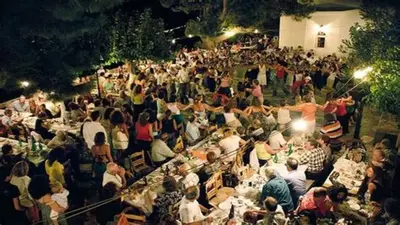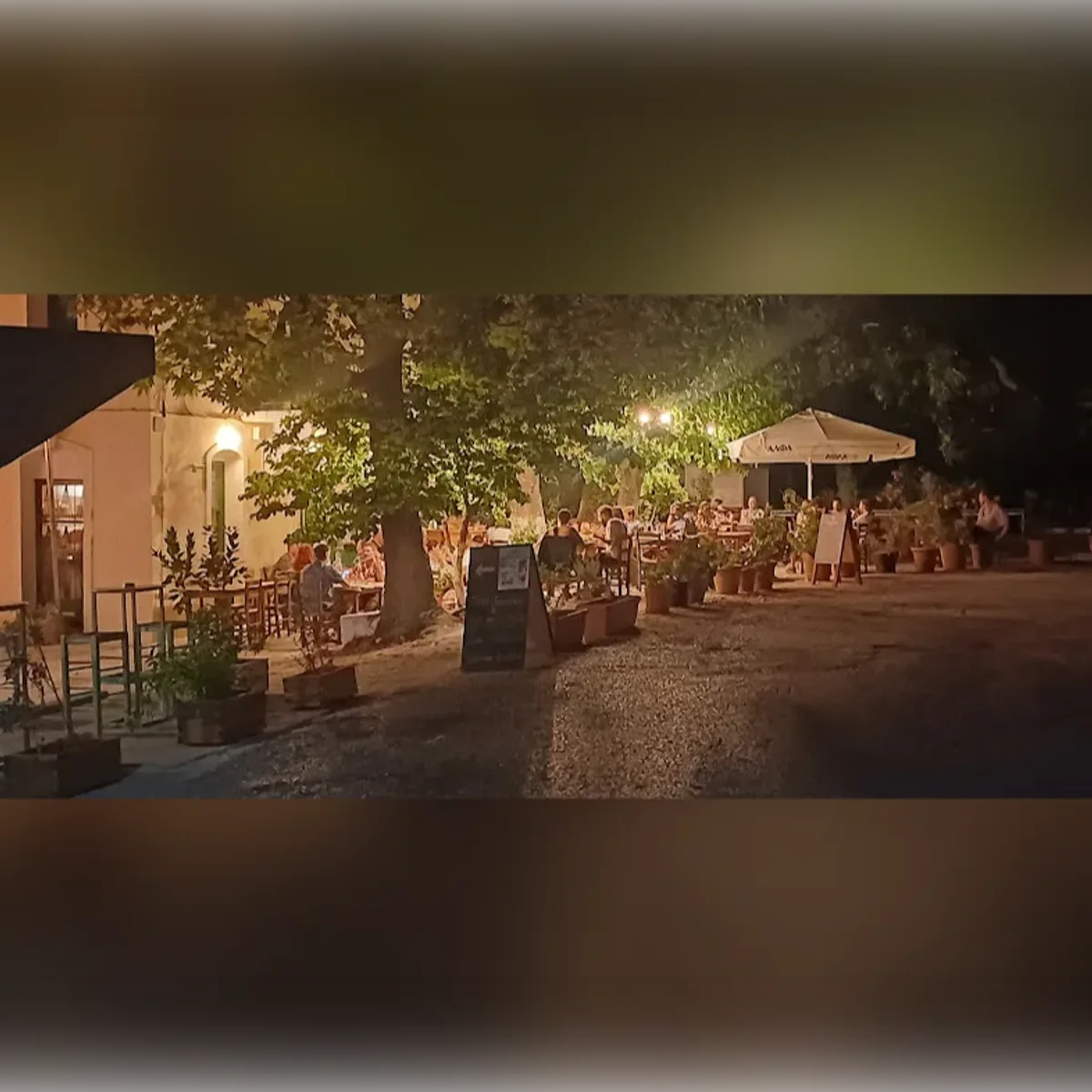
Ikaria panigiria are the island's saint's-day festivals - open-air village feasts where the whole settlement cooks, eats and dances the Ikariotikos until dawn, and where the money raised goes back into the community rather than to a promoter. They run from late June to mid-September, peak around August 6 and August 15, and are the single biggest reason people plan a summer trip to Ikaria around music. This is the full 2026 calendar, what the night actually involves, and how to find each one on Mood.
What an Ikariot Panigiri Actually Is
A panigiri on Ikaria is not a concert with a folk theme. It is a self-organised village event, run by a local committee, where long tables are laid out in a square or a clearing, goat in red sauce and raisin wine come out of communal kitchens, and a small band of violin, laouto and santouri plays the Ikariotikos - the island's own slow-building circle dance - for as long as the crowd keeps going, which on Ikaria means until sunrise and often past it.
The data reflects exactly that character. In Mood's data, Ikaria's panigiria read 1.0 on both organicness and locality almost across the entire calendar - the cleanest village-square signal of any island Mood tracks. That is the fingerprint of live acoustic instruments and a local crowd, with none of the production polish or out-of-town billing that defines a festival stage. These are events run by the village, for the village, that happen to welcome everyone who turns up.
The 2026 Ikaria Panigiria Calendar
The season opens in late June and builds through July before the August peak. Early dates include Néyia (June 23), the Áï Giánnis feast at Christós Rachón (June 24), the Ágioi Apóstoloi panigiri at Pézi (June 29) and Karavóstamo (July 1) - the last one among the most attended on the north coast. July then runs almost weekly: Phles (July 7), Ágios Dimítrios (July 12), a second Pézi feast (July 14), Aréthousa (July 17) and Agía Paraskeví (July 26).
August 6 - Rachés, the island's biggest night
The Transfiguration panigiri at Rachés on August 6 is the one outsiders have usually heard of, and the data backs the reputation: it reads a perfect 1.0 on organicness, danceability and nostalgia in Mood's data - the maximum on every dimension that defines the format. Rachés is the village famous for keeping shop hours after dark and living on its own clock, and its panigiri is the fullest expression of that. The same night, the smaller Stávlos feast runs in parallel for anyone who wants the same tradition at a fraction of the crowd.
Mid-to-late August - the wine, the fish and the long tail
The back half of August is where the calendar gets particular. A traditional panigiri runs at Amáloú on August 10, the Avláki fish-panigiri on August 11 swaps goat for the day's catch, and a Wine Feast at Phles on August 13 is built around the island's home-pressed reds. The Dormition on August 15 brings the largest single crowd of the year across several villages, and the season tails off slowly - Ágios Aléxandros on August 30 and a final Agía Sofía feast at Monókampi on September 17 close it out.
The full, continuously updated list - with each village, date and start time - sits on the Ikaria panigiria calendar on Mood, which is the most reliable way to track a calendar that local committees often confirm only weeks ahead.
What Makes Ikariot Panigiria Distinctive
Two things separate Ikaria from the rest of the Aegean panigiri map. The first is endurance: these are genuinely all-night events, and the Ikariotikos is built to absorb hundreds of dancers in a slow circle that can run for hours without resetting. The second is how non-commercial they stay. Several of the 2026 feasts - Aréthousa on July 17, the Avláki fish-panigiri on August 11 and the Phles Wine Feast on August 13 - read 0.6 on undergroundness in Mood's data, an unusually high figure for a public village event and a measure of how far these nights sit from anything packaged or ticketed.
It connects to something specific about the island. Ikaria is one of the world's documented Blue Zones, where people routinely live past 90, and the panigiri - communal food, no clock, dancing as a group rather than a performance - is often pointed to as part of why. The feasts are not folklore staged for visitors; they are how the island has organised its summers for generations.
The villages each carry their own reputation. Christós Rachón is the one famous for living after dark, Langáda and Karavóstamo draw some of the biggest crowds, and the smaller hill feasts at Arethousa or Pézi keep the most local character. The food is part of the night rather than a sideline - goat slow-cooked in red sauce, soúma and home-pressed wine - cooked in volume by the village committee and served at the long tables until it runs out.
Practical Notes for Visitors
Getting there: Most panigiria are in inland or hill villages - Rachés, Christós, Aréthousa, Pézi - reachable only by car or a pre-arranged ride. Public transport effectively stops at night, so plan the return before you go up.
Timing: Things start late and peak later. A panigiri that is quiet at 11pm is usually full by 2am, and the dancing runs to sunrise.
Cost: Entry is free. You pay for food and wine at the long tables, cash only, and the proceeds fund the village.
What to expect: Acoustic Ikariotiko music, communal seating, plates of goat and local wine. There is no stage in the festival sense and no set times - the band plays and the circle forms.
New confirmed dates this season
The island's calendar has nearly tripled since this guide first ran - Mood now tracks more than 20 confirmed panigiria on Ikaria for 2026, and most of the new dates land in August. The biggest addition is a running series called Ikariotika Panigiria: The Ultimate Summer Gathering, which plays out roughly every other night through the month - August 6, 8, 10, 11, 12, 15, 17, 20, 23, 27 and 29 - and in Mood's data reads a steady 1.0 on danceability on every one of its dates, with the familiar 1.0 on organicness and locality alongside. For anyone timing a trip around the Dormition on August 15, that series alone now covers the peak window and both shoulders of it.
Two single nights have also joined the schedule. The Fisherman's Feast on August 8 is the season's second fish-centred night, three days before the Avláki fish-panigiri above, and on August 11 comes a panigiri with Mavroudís Antoníou.
The most interesting expansion, though, is geographic. Foúrnoi Korséon - the small cluster of islands just off Ikaria - enters the calendar with two nights: the Liberation Feast on August 14 and the "Live the Tradition" panigiria on August 17. And before Ágios Aléxandros closes out the month, one more stop joins the season's long tail: the Áï Giánnis Thermastís feast on August 28.
Frequently Asked Questions
When is the Ikaria panigiri season in 2026?
The season runs from late June to mid-September 2026, with near-weekly feasts through July and the peak around August 6 (Rachés, the Transfiguration) and August 15 (the Dormition). The calendar opens with Néyia and Christós Rachón on June 23-24 and closes with Monókampi on September 17. The full village-by-village schedule is on Mood's Ikaria panigiria page.
Which is the most famous Ikaria panigiri?
The Transfiguration panigiri at Rachés on August 6 is the best known and the most attended. In Mood's data it reads a perfect 1.0 on organicness, danceability and nostalgia. The Dormition feasts on August 15 draw the largest combined crowds across the island.
Are Ikaria panigiria free?
Yes. Entry is free; you pay only for food and wine at the communal tables, in cash, and the money raised funds the hosting village. This non-commercial structure is part of what the festivals are known for.
What music is played at an Ikaria panigiri?
Live acoustic Ikariot folk - violin, laouto and santouri - playing the Ikariotikos, the island's own slow circle dance, alongside wider nisiotika. There are no DJs and no fixed set times; the same small band plays through the night.
Ikaria runs its summers around the panigiri, and 2026 keeps near-weekly feasts from June to September. The full island calendar, with dates and villages, is on Mood.
Browse all Ikaria events on Mood
Every panigiri on this page comes from Mood’s live tracking - dates shift, lineups get announced late, and the calendar updates as they do. If you’re planning the trip itself - which islands to combine, when to go, and how to get between them - GreekTripPlanner’s island-by-island guide to planning a panigiri trip is a good companion.