Panigiria Paros 2026: The Complete Summer Festival Calendar
Updated 8 min read Mary Kaynelidi
Panigiria are Greek saint-day village festivals - open-air, free, anchored on the name day of a church or chapel, with live nisiotika music, food, wine and communal dancing that starts at dusk and runs past midnight. Paros has 10 confirmed panigiria across summer 2026 in Mood's data, distributed from late June through late August, with the peak concentration around August 15 - the Dormition of the Virgin and the island's single biggest cultural event. This guide covers every confirmed date, where it runs, and what to expect inside the village square.
What a panigiri actually is
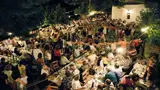
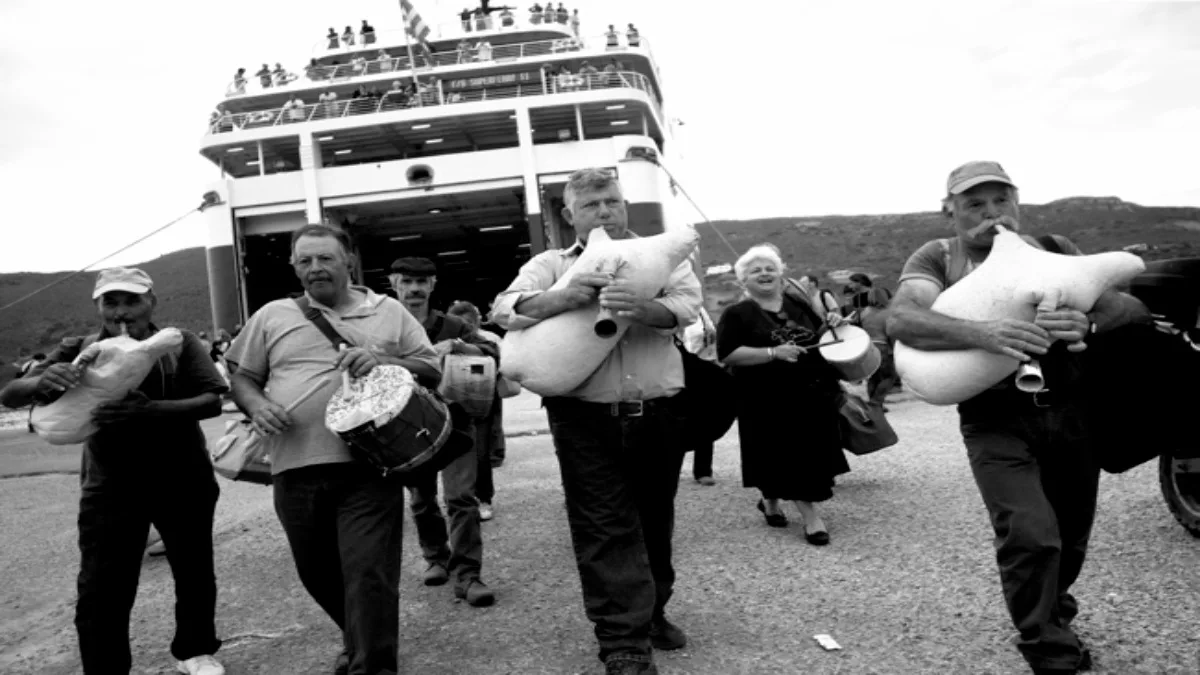
A panigiri is not a music festival in the commercial sense. It's a village ritual that runs once a year, on the church's saint day, in the church's own courtyard or the surrounding plateia. The format is structurally consistent across the Cycladic islands: a live ensemble of three to six musicians playing violin, lute, tsambouna (Greek bagpipe), santouri and clarinet; long tables set out under string lights; food provided either by the church committee or by attending families; wine in carafes; and a circular floor where everyone dances syrtos and ballos in chains that grow as the night goes on.
In Mood's data, the panigiria across Paros share a remarkably consistent fingerprint - locality reads 1.0 across every confirmed event, organicness averages 0.96, and outdoor scores cluster between 0.8 and 1.0. The structural identity of the format is preserved village to village.
These are not tourist events organised for the season. They run because the church runs them, because the village has run them for generations, and because the musicians who play them are usually from the island. A visitor is welcome but not centred. The deal is: you turn up, you contribute (a few euros at the donation plate, or food, or the wine you brought), and you stay long enough that the night reaches the syrtos.
The 2026 calendar by date
The Paros panigiri season opens in late June with the Klidonas night and runs through August 27. Ten confirmed events span six villages:
June 23 - Klidonas, Alyki and Naoussa. The Klidonas tradition (the night of Saint John the Baptist's eve) runs at two sites simultaneously on Paros - the Alyki version on the southern coast and the Naoussa version on the north harbour. Both involve a fire-jumping ritual (literally - attendees jump over a small fire for luck and the burning of withered St John's Day garlands) and a night of music that pre-dates Christianity in Greece by some margin.
June 24 - Agios Athanasios o Parios, Kostos. A smaller mountain-village panigiri honouring the 18th-century theologian Athanasios Parios, born and ordained on the island.
June 30 - Agioi Anargyroi, Paroikia. A more compact panigiri at the Paroikia church of the "moneyless saints" (Saints Cosmas and Damian), with the food and music inside the church's small courtyard.
July 17 - Agia Marina, Kostos. Saint Marina's day brings the village of Kostos back into the calendar for the second time, with a larger ensemble than the June panigiri.
July 24 - Agia Anna, Paroikia. Saint Anne's panigiri in the island capital, on the chapel grounds.
August 6 - Metamorfosi tou Sotiros, Marpissa and Alyki. The Transfiguration of Christ - one of the major fixed dates in the Orthodox calendar - runs as twin panigiria on Paros: the Marpissa version on the eastern side of the island and a separate Alyki version on the southern coast. In Mood's data, the Marpissa panigiri reads 1.0 on outdoor, 1.0 on locality and 1.0 on organicness - the cleanest profile match for a village-square nisiotika night with no production polish.
August 15 - Panagia Ekatontapyliani, Paroikia. The peak of the Paros panigiri season. The Ekatontapyliani panigiri is the island's biggest single religious-cultural event of the year, anchored on the 4th-century church of "Our Lady of a Hundred Doors" - one of the oldest continuously operating churches in Christendom. Mood reads this panigiri at 1.0 nostalgia, 1.0 locality, 1.0 organicness and 1.0 danceability - a perfect score across every dimension that matters for the format, plus capacity 0.8 (the largest single crowd on the panigiri calendar).
August 27 - Agios Fanourios, Ambelas. The closing panigiri of the season - Saint Fanourios's day in the small north-eastern village of Ambelas, with the fanouropita (Saint Fanourios's cake) tradition built into the night.
What to bring, what to wear, when to arrive
A few practical notes that separate visitors who blend in from visitors who stand out the wrong way.
Arrive after 21:00. The food and music start formal around 20:30, but the night doesn't enter its real phase until 22:30 or later. The first hour is mostly setup, family arrivals and the church liturgy. Going at 20:00 means standing around - going at 22:00 means walking into the music.
Wear something neutral and comfortable. Beach gear and short-shorts read as out of place. The dress code is village-Sunday - clean, simple, often a long skirt or trousers, modest tops. Footwear matters because the dance lasts hours on stone or packed earth.
Bring cash. There's no card terminal at a panigiri. €20-40 covers food and wine for two; a contribution to the church committee plate is appreciated though not mandatory.
Don't film the dance. This is the most common visitor mistake. Photos of the musicians and the food are fine; videos of strangers in the chain dance are not. The dance is communal, not a performance.
Eat what's offered. The food is usually the local home-cooked spread - gemista, lamb, fava, local cheese, baked fish. Refusing reads as cold; eating is the participation.
Why August 15 matters
The Dormition of the Virgin - Koimisis tis Theotokou - is the single most observed religious holiday in Greece outside of Easter, and on Paros it concentrates around Panagia Ekatontapyliani in Paroikia. The church itself dates to roughly 326 CE, founded by Emperor Constantine and later expanded by Justinian; the "hundred doors" name refers to a tradition that 99 doors are visible and the 100th will reveal itself only when Constantinople is returned to Greek Orthodoxy. The panigiri on August 15 attracts visitors from across Greece and the diaspora - the island's ferry traffic on August 14-16 is roughly 3x the off-peak average. Booking accommodation that weekend by mid-July at the latest is the operational rule.
How Mood tracks the calendar
Panigiria are notoriously hard to discover from abroad. They aren't ticketed, aren't on Eventbrite, aren't on Resident Advisor, and most don't have websites or social media. Information is local - village notice boards, parish announcements, word of mouth. Mood aggregates the confirmed dates from local sources into one searchable calendar, with the saint day, village location, and music ensemble (where available) listed per event - updating as new dates confirm through July and August.
Marpissa adds an extra date this year: a nisiotiko glendi in Marpissa on July 25, ahead of the village's better-known August 6 Metamorfosi feast.
The season no longer ends on August 27
This guide closed the season with Saint Fanourios in Ambelas on August 27. The data now tells a different story: Mood currently tracks 25 confirmed events on Paros, with a series called "Πάρος 2026: Ένα Καλοκαίρι Γεμάτο Παράδοση" (Paros 2026: A Summer Full of Tradition) running near-daily through August and carrying on into September.
The series opens the month on August 2 and keeps a steady rhythm around the major feasts - a night on August 12 ahead of the Ekatontapyliani peak, and one on August 21 that reads 1.0 on danceability in Mood's data, among the highest readings in the Paros sample. The night of August 29 - two days after the old season "close" - runs regardless, also at 1.0 danceability.
September is the genuinely new chapter. Nights on September 6 and on September 19 keep the glenti alive a full month after the beaches empty, and the calendar even holds a December 5 entry for panigiria and cultural events that pull the tradition into winter. For anyone visiting Paros off-peak, the panigiri has stopped being a strictly summer affair.
Frequently Asked Questions
Are panigiria free?
Yes. There is no entry charge. Food and wine are either free (provided by the church committee) or at-cost from a local taverna setting up at the panigiri. A small contribution to the church plate is appreciated but not mandatory.
Can foreigners attend a Paros panigiri?
Yes. Panigiria are open to anyone. The events are not advertised at foreign tourists, and the experience won't be translated - but the welcome is genuine if you arrive respectfully and stay for the night.
What time do they end?
Most run until 02:00-03:00. The big August 15 panigiri in Paroikia can run past 04:00.
Is there assigned seating?
No. Long tables with benches, first-come-first-served. The dance floor stays clear in the middle.
What music do they play?
Nisiotika - the traditional song repertoire of the Cycladic islands - plus older laika and panigiriotika. The instruments are violin, lute, tsambouna (the Greek goat-skin bagpipe), santouri and sometimes clarinet. Modern equipment is minimal; the sound is acoustic-led with light PA.
Where do I find this year's lineup?
The full Paros panigiria 2026 calendar on Mood lists every confirmed date, village location and saint day. New dates confirm through the summer.
Find events
Paros panigiria on Mood