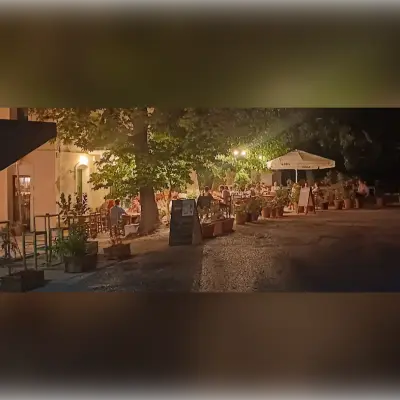
Naxos runs the most concentrated panigiri tradition of any Cycladic island - its mountain villages have kept the format intact for generations, and the August 15 Filoti panigiri is one of the largest single-night village festivals in all of Greece. Mood is tracking 12 confirmed panigiria across summer 2026 in Naxos, distributed between coastal Chora and the in land villages of Filoti, Apeiranthos, Apollonas, Koronos, Potamia, Melanes and others. This guide covers every confirmed date, the saint-day context, the music ensembles involved, and what makes Naxos's mountain panigiria distinct from the rest of the Cycladic circuit.
Why Naxos panigiria are different
The Cyclades all run village panigiria - but Naxos's mountain interior preserves the format at a depth no other island matches. The villages of Filoti, Apeiranthos and Apollonas sit between 350 and 600 metres above sea level, isolated enough that the spoken dialect, the music repertoire, and the polyphonic singing style have stayed structurally older than what you'll find on Paros or Mykonos. Apeiranthos in particular is known for a distinct vocal tradition that musicologists trace partly to Cretan refugee settlement in the 17th century - the village still keeps its own folk archive, museum and language inflection.
In Mood's data, the Naxos panigiria sample reads locality at a perfect 1.0 across every confirmed event, with organicness averaging 0.97 and nostalgia at 0.95. The vocality scores cluster in the 0.8-1.0 range - meaning the format is built around the human voice and the live ensemble, not amplified production. The opening panigiri of the season (the June 20 Traditional Panigiri at Filoti) features confirmed musicians Lefteris Vazaios, Maria Nomikou and Stelios Manolas, and Mood reads it at a perfect 1.0 vocality - the maximum reading for the dimension.
The 2026 calendar by date
June 20 - Traditional Panigiri, Filoti. The opener of the Naxos panigiri season - a non-saint-day "παραδοσιακό πανηγύρι" run by the village association at Filoti's main square. Lefteris Vazaios on lead vocals, Maria Nomikou on female vocals and Stelios Manolas on accompaniment. This is the warm-up before the bigger Filoti panigiri on August 15, and it's where the year's musicians and dance leaders rehearse the form.
June 30 - Agioi Apostoloi, Melanes. The panigiri of the Twelve Apostles in Melanes - a quieter village inland from Chora, with a more intimate format than the Filoti weekenders.
July 7 - Agia Kyriaki, Potamia. Saint Kyriaki's day in the small green village of Potamia, known for its olive groves and natural springs.
July 8 - Agios Prokopios. Saint Procopius's day, with the panigiri running on the coastal Agios Prokopios beach area.
July 14 - Agios Nikodimos, Chora and Glinado. Twin panigiria on Saint Nikodemos's day - one in the island capital Chora (the larger one) and one in the inland village of Glinado.
July 17 - Agia Marina, Koronos and Angidia. Twin panigiria again on Saint Marina's day - Koronos is one of Naxos's higher-altitude villages and the Koronos panigiri runs particularly long.
August 11 - Traditional Glenti, Danakos. A non-saint-day "παραδοσιακό γλέντι" run by the village of Danakos - fewer attendees, harder to find, more authentic.
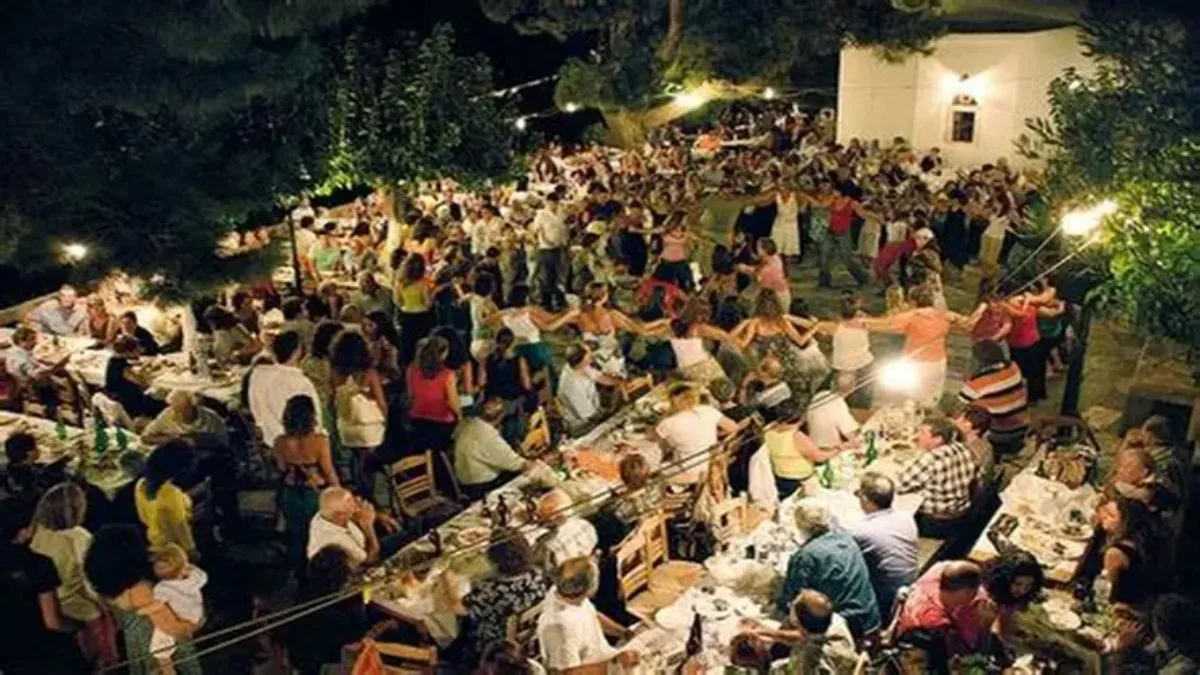
August 15 - Panagia, Filoti. The peak of the Naxos panigiri season and one of the largest village festivals in Greece. The Filoti August 15 panigiri attracts attendees from the entire island plus mainland Greek and diaspora visitors. Filoti's main square fills with multiple ensembles rotating through the night, food tables run for hundreds, and the dance starts properly after midnight. In Mood's data, this panigiri reads 1.0 outdoor and capacity 0.6 - the largest single-night event in the Naxos panigiri calendar.
August 29 - Saint John the Baptist (Beheading), Apollonas and Apeiranthos. The closing panigiria of the season, run as twin events at the northernmost coastal village (Apollonas) and the in land mountain stronghold of Apeiranthos. Both run 1.0 outdoor in Mood's data, and Apollonas additionally reads 1.0 on nature (a tiny harbour village with the panigiri running on the seafront) - the only Cycladic panigiri in the platform's data with a maximal nature reading.
The August 15 logistics
The Filoti panigiri on August 15 is the operationally challenging one for visitors. The village sits 18 km from Chora through mountain road, the buses run a special program for the night, and parking in Filoti itself is essentially impossible. Three practical notes:
Accommodation: Filoti has a handful of guesthouses but they book out a year in advance for August 15. The realistic option is staying in Chora, Apollonas, or Halki, and travelling for the night.
Transport: KTEL Naxos runs additional buses to Filoti the afternoon of August 15 and return buses through the night to Chora. Schedule confirms in early August. Taxis are scarce - book ahead or share with attendees.
Timing: Arriving in Filoti before 22:00 means waiting; the panigiri's main phase runs midnight through 04:00. If you arrive by 23:30 with a plan to leave around 04:00, you're inside the night's real arc.
What to expect inside the village square
The format is consistent across the Naxos calendar but the texture changes village to village. Filoti runs the largest single panigiri but it also has the most non-locals - by August 15 the crowd is mixed Naxiot and visitor. Apeiranthos and Apollonas on August 29 are smaller, more inward-facing events where locals are the majority and visitors integrate or stand visibly aside. Koronos on July 17 is a deep mountain village panigiri that rewards arriving early enough to walk the village before the music starts.
The food is consistently local: lamb on the spit, baked fish, fava, local cheeses (Naxos kefalotyri and arseniko are both AOC), and Naxos wine in carafes. The donation plate at the church covers operational costs - €5-10 per person is normal.
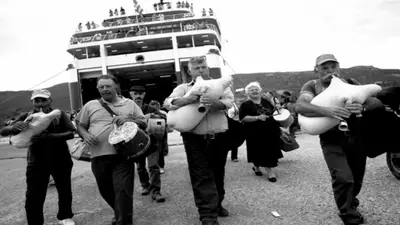
The music begins acoustic - violin, lute, tsambouna (Greek bagpipe), and sometimes a singer leading the dance. The dance starts as a slow syrtos, accelerates into ballos, and on a good night ends in faster pidiktos forms that the older dancers lead. Foreigners are welcome to join the chain but should join at the end and follow the lead - interrupting the existing rhythm is the visible faux pas.
How Mood tracks the panigiri calendar
Panigiria don't use tickets and don't promote online. Information comes from village parish committees, KTEL bus schedules, and word of mouth. Mood aggregates the confirmed 2026 dates with the saint day, village, and confirmed musicians (where listed) into one searchable calendar. The full Naxos panigiria 2026 listing on Mood updates through the summer as new dates and ensembles confirm.
The "Γλέντια & Πανηγύρια της Νάξου" series fills out August
Since this guide was written in June, the Naxos calendar has changed scale. Mood now tracks 17 confirmed glentia and panigiria on Naxos for August 2026 alone - the original guide covered 12 for the entire season. The backbone is a series called "Γλέντια & Πανηγύρια της Νάξου" (Glentia and Panigiria of Naxos), running roughly every other night through the month around the fixed anchors of Filoti and Apeiranthos.
The series opens on August 2 with an August programme night that reads 1.0 on both nostalgia and danceability in Mood's data. A two-night run for the Transfiguration of the Saviour follows - August 5 and August 6 - a feast the original island calendar didn't include at all. On August 17 the series stages its Summer Dance, and on August 15 itself, alongside the big Filoti panigiri, another series night runs in parallel.
The close lands on August 29: next to the twin Saint John panigiria in Apollonas and Apeiranthos, the series adds its own Saint John panigiri - also reading 1.0 nostalgia and 1.0 danceability in Mood's data. For anyone on the island in any given August week, the free evening is now arguably the hardest thing to find.
Frequently Asked Questions
Are Naxos panigiria better than Paros or Mykonos panigiria?
They're different. Naxos's mountain villages run a more inward-facing, locally-anchored panigiri tradition than the coastal Cycladic islands. Paros has more frequent panigiria across more villages; Mykonos has very few panigiria (most locals leave for their own home-island ones). Naxos is the deepest panigiri island in the Cyclades.
Do I need to speak Greek?
It helps significantly but is not required. The musicians, dancers and food won't translate to English. Arriving with a Greek-speaking companion makes a real difference; arriving alone is fine if you're comfortable not understanding the spoken context.
What's the difference between a panigiri and a "glenti"?
A panigiri is anchored on a saint's day. A glenti is the celebration itself - the music, food and dance. A "παραδοσιακό γλέντι" not tied to a saint day (like the August 11 Danakos one) is a village-organised celebration without the religious anchor. The format is otherwise identical.
What about Apeiranthos specifically?
Apeiranthos is the village to know if you want the deepest Naxos panigiri experience. The village sits at 600 metres altitude, keeps its own folk archive and museum, and the local dialect is distinct from the rest of the island. The August 29 Saint John panigiri there is one of the most cited inland Cycladic panigiria.
What's the right time to book accommodation for August 15?
By mid-July at the absolute latest. The whole island fills around the Filoti panigiri - Chora, Apollonas, Halki, every guesthouse on the road to Filoti. By August 1 the realistic options are camping or rooms in the smaller western villages.
Where do I find this year's confirmed lineups?
The full Naxos panigiria 2026 calendar on Mood lists every confirmed event with date, village location, saint day, and the music ensemble where it's been announced.