Panigiria in Tinos 2026: A Complete Guide to the Island's Summer Calendar
Updated 9 min read Mary Kaynelidi
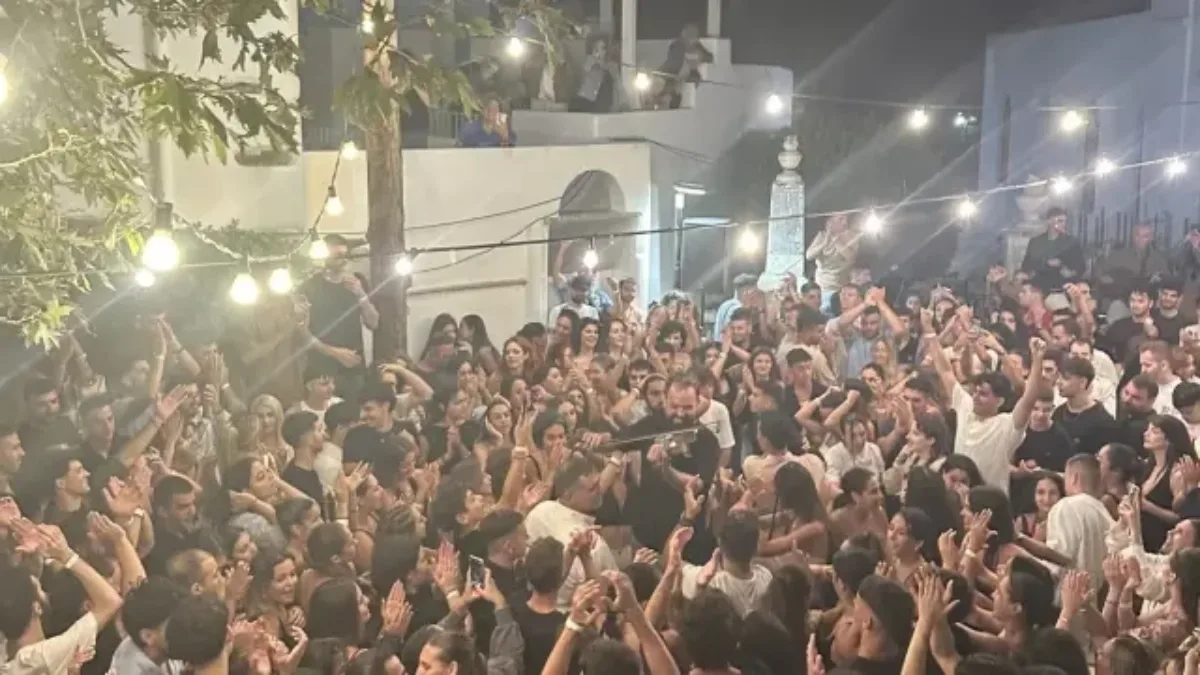
Panigiria in Tinos are open-air village celebrations tied to Orthodox saints' days, held in church courtyards and small squares across more than twenty hill villages from late May through early September. Each one is anchored by a live nisiotika ensemble - violin, lute, sometimes tsabouna - and a meal that the village runs at cost. The single biggest day of the calendar is 15 August, the Dormition of the Theotokos, when the Megalochari icon at the Panagia Evangelistria church becomes the destination of one of the largest pilgrimages in the Orthodox world; the night of 15 August is then held in every settlement at once.
The Tinos panigiri season is unusually dense for a Cycladic island. Across the summer, the marble-walled villages of the hill country - Pyrgos, Falatados, Ysternia, Steni, Kardiani, Skalados, Marlas, Xinara, Agapi, Koumaros, Venardado, Komi, Aetofolia, Potamia, Kalloni - each take their turn. The cluster between 9 August and 18 August functions as a moving festival you can follow village to village by car or local bus.
The Tinos Panigiri Calendar 2026
Mood is tracking 23 individual panigiria on Tinos for the 2026 season, each tagged with the local nisiotika ensemble and the village square it runs in. Dates and starting times below are the confirmed listings; arrival from 21:00 is the local norm, with the music settling in around 22:00 and continuing until 03:00 or later in the central August nights.
May 30 - Komi
The season opens in Komi, in the centre of the island, with a Saturday-evening panigiri. Find the Komi panigiri on Mood. The village runs it again on 29 August, closing the high-summer arc.
June 27 - Pyrgos
Pyrgos is the marble-carving capital of Greece - the village's white-marble fountains, doorframes, and church iconostases came from workshops still active today. The June 27 panigiri opens the proper summer programme. In Mood's data, the Pyrgos panigiri reads 1.0 on outdoor, 0.9 on locality, 0.9 on danceability, and 1.0 on organicness - the cleanest profile match for a village-square nisiotika night with no production polish.
July 11 and 12 - Aetofolia
A two-night cluster in Aetofolia, with the panigiri on Saturday and a follow-on nisiotiko glenti on Sunday. Both run in the village square.
July 23 - Agia Pelagia at Kechrovouni
The 23 July panigiri at Kechrovouni honours Saint Pelagia, the nun whose 19th-century vision led to the discovery of the Megalochari icon - the founding event of Tinos as a pilgrimage island. The monastery courtyard hosts the panigiri itself.
July 25 - Agia Paraskevi at Karambousa
Saint Paraskevi panigiria are widespread across Greek villages on 26 July; on Tinos the eve-of-feast celebration runs in Karambousa.
July 31 - Steni
Steni runs an early-August opening panigiri in the village square, with the Steni Kamari upper neighbourhood holding its own evening on 22 August.
August 2 - Agios Romanos
The Agios Romanos panigiri is the first of the proper August cluster. The village sits on the northwest coast.
August 9-18 - The Hill Village Cluster
This is the densest stretch of the summer. Across nearly ten consecutive nights, one village after another runs its panigiri:
9 August - Kalloni
11 August - Skalados
12 August - Marlas
13 August - Xinara (two events listed - the village panigiri proper, plus a nisiotiko glenti)
15 August - Ysternia (Dormition night across the village)
16 August - Venardado
17 August - Koumaros
18 August - Agapi
Across these events, Mood's enrichment data reads an average of 1.0 on outdoor, 0.9 on locality, and 0.9 on danceability - a consistent profile of village-square folk nights without sound engineering or ticketing.
August 15 - Dormition of the Theotokos
The single largest day of the year on Tinos. The Megalochari icon is carried in procession from Panagia Evangelistria church down to the harbour; the bishopric's pilgrimage crowd fills Chora, and the country's news anchors broadcast live from the procession. By evening, the panigiri night begins in every village simultaneously. Mood's primary listings for the Dormition are the Ysternia Dormition celebration and the surrounding nisiotika nights; the islandwide observance covers every settlement.
August 22 - Steni Kamari
The upper neighbourhood of Steni runs a late-summer panigiri after the main hill-village cluster has closed.
August 28 and 29 - Kampos and Komi
The Kampos village runs its nisiotiko glenti on 28 August; Komi reprises the May 30 panigiri the following night.
September 5 - Falatados
The Falatados panigiri closes the season. By early September the pilgrimage crowd has gone, the meltemi has dropped, and the night feels noticeably smaller than mid-August.
What Makes Tinos Panigiria Distinct
The Tinos panigiri calendar carries two specifics other Cycladic islands don't have at the same density. The first is the Megalochari pilgrimage at the centre of the summer: the 15 August feast is treated as a national religious moment, and the village panigiria that follow it are read locally as the secular half of the same observance. The second is the marble-village geography - the hill villages of Tinos were the Cycladic centre of marble carving from the 18th century onward, and the church courtyards, doorframes, and central fountains where the panigiria are held still carry the work of those workshops.
The musical tradition is nisiotika in the broad Aegean sense - violin, lute, sometimes tsabouna (Greek bagpipe), with the islandwide ballroom rotation of syrtos, ballos, sousta, and waltzes the bands have absorbed from generations of Cycladic island repertoire. The vocal register is high and the song repertoire mixes Tinian originals with shared Cycladic standards. Mood's enrichment data on Tinos events reads an average vocality score of 0.8 across the 23-event sample, which tracks with how vocal-led nisiotika nights actually sound in person.
Practical Guide for Visitors
A few specifics that make a difference for visitors planning around the panigiri calendar.
Bring cash. Most villages run the food and drink as a community kitchen at cost; card readers are rare, and ATMs in the smaller villages are not reliable.
Arrive after 21:00. The music starts around 22:00 and the dancing builds slowly until midnight. Arriving for dinner at the panigiri is common; arriving at 19:00 means waiting in an empty square.
The 15 August window is fully booked. Tinos accommodation across Chora and the central hill villages sells out by early July for the week around 15 August. Book by mid-June or accept a base elsewhere in the Cyclades with a day boat in.
Transport between villages is car or scooter. Buses run from Chora to most villages once or twice a day, but late return buses do not exist. Renting a car for the 9-18 August cluster is the standard solution; otherwise plan to stay overnight in the village you've gone to.
Layers. Hill-village squares cool down hard after 02:00, even in August. A light jacket or a long-sleeve shirt is the difference between staying until 04:00 and leaving early.
Find Folk and Traditional Music Events in Tinos on Mood
Mood lists the 2026 Tinos panigiri calendar in full, with venue locations and dates for each village. Browse all upcoming Tinos events on Mood to see the rolling list of panigiria, glentia, and the smaller summer music nights that don't appear on the standard tourism calendars.
More village panigiria confirmed
Beyond the big Dormition feast, more of Tinos's inland villages have locked their dates. A panigiri at Kardiani opens on August 1, followed by Tarampados on August 7 and Tripotamos on August 23 - villages of the island's green, marble-quarry interior.
Two more round out the season: the caper festival at Potamia on August 8, tying the feast to the harvest, and Triantaros the same evening.
A touring programme threads through the August cluster
The latest calendar update does not add new villages - the hill-village cluster was already complete - but it does add a programme running alongside it. The Summer 2026 - Musical Journey through the Cyclades and Athens programme counts seven Tinos evenings: 8, 11, 13, 15, 17, 22 and 28 August. These are not saints' feasts - they are programmed nisiotika evenings running through the same weeks as the village sequence, with the 15 August date landing on Dormition day itself. In Mood's data, the evening of the 22nd reads 1.0 on vocality - a night built around the voice rather than the dance floor.
One more entry lands in the middle of the big week: the Calendar of August Panigiria and Glentia on 16 August, between the Ysternia evening and Venardado's. Mood now tracks 28 listings on Tinos for the season - up from the 23 in the previous update - with the new entries thickening exactly the 8 to 28 August window, the stretch when the island already has an evening for every night.
Frequently Asked Questions
When are the panigiria in Tinos?
The Tinos panigiri season runs from late May through early September, with the densest cluster between 9 August and 18 August. The single biggest day is 15 August - the Dormition of the Theotokos - when every village runs its panigiri at the same time. Mood lists the 2026 calendar with confirmed dates for 23 individual events across more than twenty villages.
Are panigiria in Tinos free?
The panigiria themselves are free to attend - there is no ticket and no entry fee. Food and drink are sold at cost by the village committee, so plan to bring cash. A few of the larger summer-event village glentia (clearly labelled "Νησιώτικο Γλέντι" rather than "Πανηγύρι") may charge a small entry of around €10 to cover the band; the saints'-day panigiria themselves do not.
What is the biggest panigiri in Tinos?
The biggest single occasion is 15 August - the Dormition of the Theotokos - anchored by the Megalochari icon procession at the Panagia Evangelistria church in Chora. The 15 August night is then held in every village simultaneously; the Ysternia evening is one of the largest. Outside the Dormition, the Pyrgos panigiri on 27 June is the marble-carving village's main night of the year.
What music is played at Tinos panigiria?
The Tinos panigiri sound is nisiotika - Aegean island folk played on violin, lute, and sometimes the tsabouna (Greek bagpipe). The dance rotation cycles through syrtos, ballos, sousta, and the European-borrowed waltzes that became standard in Greek village dance halls in the 20th century. Listings on Mood's Tinos calendar carry the nisiotika and Greek-folk genre tags for every confirmed panigiri.
Mood is the live music discovery platform that catalogues village panigiria across the Greek islands alongside club nights, concerts, and festivals. Browse all upcoming events in Tinos on Mood to plan around the 2026 panigiri calendar.
Find events
Browse Tinos events on Mood