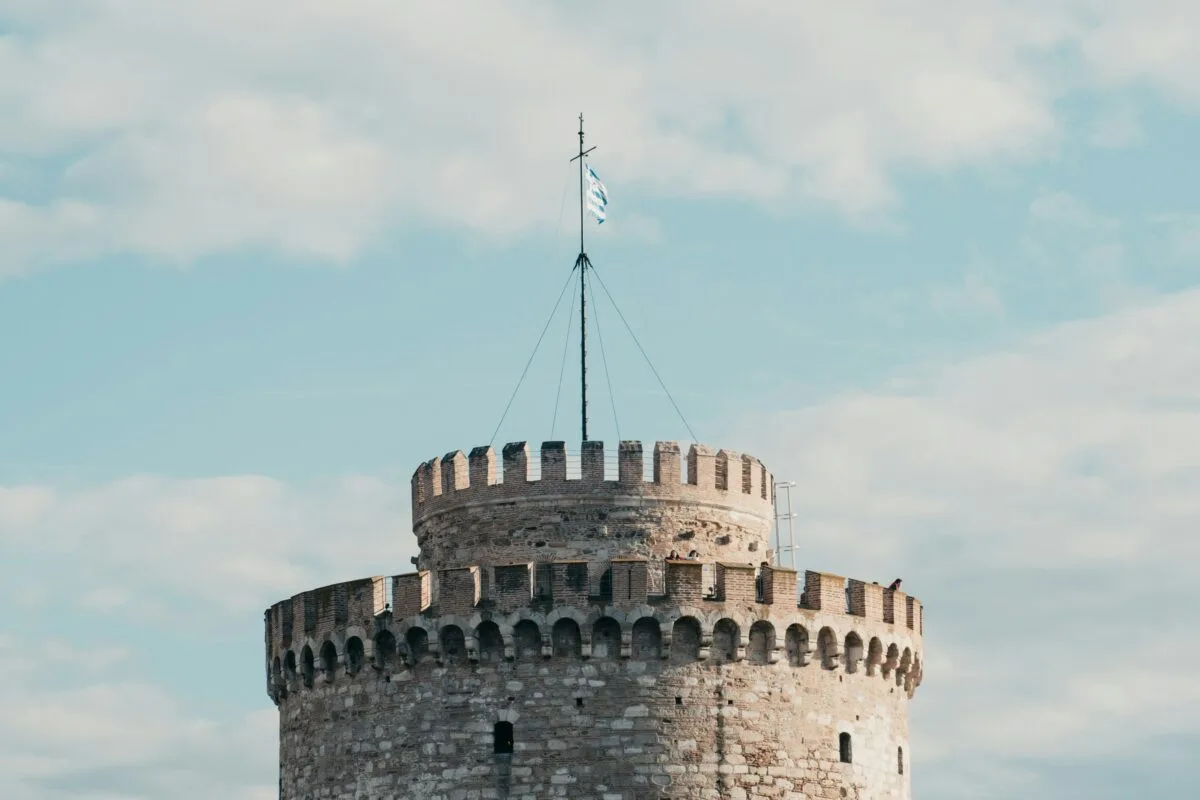
Thessaloniki is the Erasmus city that rarely makes the shortlist and usually ends up being the one people recommend to the next intake. It is smaller than Athens, walkable in a way few Greek cities are, and split between three host universities that each pull incoming students toward a different part of town: the Aristotle University of Thessaloniki (AUTH), the University of Macedonia, and the International Hellenic University. This guide covers the practical side of a semester here - where to live, how the paperwork differs if you are not an EU citizen, what things cost, and how to find live music events in Thessaloniki on Mood once classes settle into a rhythm.
Where to live, and why it depends on your host university
AUTH has by far the largest student population, and its campus sits wedged between Charilaou, Depo and Ano Toumba - a few minutes on foot from Kamara, the arch that still marks the centre of student life. The University of Macedonia is closer to downtown, near Analipseos, while the International Hellenic University runs mainly out of Sindos, west of the city. The rent bands below are for 30-40 square metre studios and come from July 2026 asking-price data, so treat them as a starting point, not a quote.
Charilaou and Depo - the closest neighbourhoods to the AUTH campus, roughly 330-440 euros.
Toumba - livelier, with cafes and bars built up around the football stadium, roughly 340-460 euros.
Ano Poli - the old town above the centre, cheaper but a longer walk to the faculties, roughly 320-420 euros.
Evosmos and Stavroupoli - the most affordable part of the city, with a direct bus link toward both the centre and Sindos, roughly 270-350 euros.
Kentro - further from AUTH but everything within walking distance, roughly 390-520 euros.
Demand spikes hard in September, alongside enrolment, so anyone searching from July or August tends to find better prices and more choice. See a place in person, or have someone see it for you, before sending a deposit - listings without a real property behind them circulate in the same Facebook groups that are otherwise the best source of leads.
Getting around: the pass, the metro, and the bus network
Once you are registered, your academic ID unlocks a student-rate ThessCard, which brings the unlimited monthly pass on OASTH buses and the metro down to around 8 euros - a fraction of the standard fare. Renew it at an OASTH ticket office with your ID and student card, or through the oseth.com.gr app if you are a fresher who has not received a physical card yet. The metro's single line currently runs from the New Railway Station to Nomarchia, and test runs began in summer 2026 for the Kalamaria extension - five new stations, aiming to open commercially within the same stretch. Until that lands, OASTH's bus network covers most of the distances you will actually need.
The paperwork week - and where it differs for exchange students
The paperwork is lighter than in most countries, but the first stop is different depending on which of the three universities you are enrolled at, because each has its own Erasmus Student Network chapter running welcome events alongside the university's own international office. At AUTH, that means checking in at the International Relations Office in the Administration Building, then meeting your institutional coordinator and registering with your faculty's secretariat; ESN AUTH runs the Welcome Days jointly with the university's own European programmes department. The University of Macedonia and the International Hellenic University each run their welcome week through their own chapters, ESN UOM and ESN IHU, rather than a shared one, so the first useful move on arrival is finding out which chapter covers your specific host institution, not assuming there is a single citywide induction. Erasmus Student Network's Thessaloniki chapters are also known for organising a multi-day excursion to Skiathos early in the semester, which has drawn well over a thousand incoming students across past years and is usually the fastest way to meet people from outside your own course.
EU and EEA students are covered at public hospitals with the European Health Insurance Card. Non-EU students should start on their residence permit paperwork as soon as they have their acceptance letter, since that process runs through Greece's immigration authorities and moves on a different timeline than anything EU citizens have to deal with - leaving it until arrival week is the most common avoidable stress of the whole exchange.
What things cost
Coffee is the real budget leak, not rent - a freddo espresso runs 2 to 4.5 euros and becomes a daily habit fast. A souvlaki wrap is around 4 euros, and bougatsa, the custard pastry that doubles as breakfast across the city, is roughly 2.5-3 euros. AUTH's student canteen, the lesxi, offers free or heavily discounted meals to students who meet income criteria, Erasmus students included at most faculties. One benefit that will not apply to most single-semester exchanges but is worth knowing about if you are staying a full year: Greece's student housing subsidy, 1,500 euros annually for study in the Thessaloniki regional unit specifically (the same rate as Attica; other regions get 2,000), requires a lease of at least six months and a family income under 40,000 euros, plus 3,000 more per additional child - paperwork that assumes a longer stay than most exchange semesters allow.
Where the music is
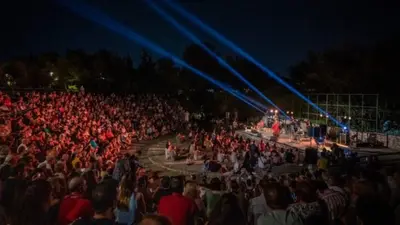
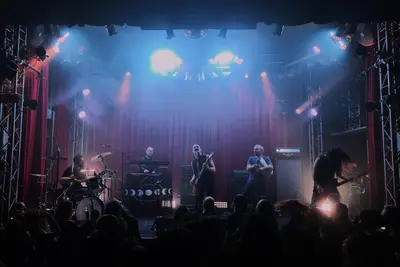
Mood's own data lists 70 live-music events across Thessaloniki this September, spread across genres that rarely share a bill anywhere else - post-punk one night, entehno the next, a K-pop showcase the night after that.
That last one is a useful entry point for anyone still building up their Greek: K-Pop Fever at Lazaristes Monastery on September 6 reads 1.0 on danceability and 0.9 on valence in Mood's data, and a locality score of just 0.2 - well under the roughly 0.68 average across the month's board - which tracks with a night built for an international crowd rather than a local one.
Lazaristes Monastery, a former monastery turned cultural venue on the western edge of the centre, also hosts Villagers of Ioannina City later in the month, so it is worth following on its own rather than just for one date.
WE does something similar from the rock side: across September it books Jamie Woon, Tito & Tarantula, The Crazy World of Arthur Brown and Joe Lynn Turner, four English-language touring acts that average around 0.38 on locality in Mood's data, again well under the city's 0.68 average for the month - a venue that leans toward international bookings rather than Greek-language ones, which matters if you are still a few months from following a set in Greek.
None of this replaces building an actual circle of venues over a semester, but it is a faster way into the city's calendar than waiting for someone to forward you a poster.
Frequently Asked Questions
Is Thessaloniki a good city for Erasmus or exchange students?
Yes, and it is often underrated next to Athens - it is smaller, cheaper, and walkable enough that most students never need to think hard about transport once they have a ThessCard. The trade-off is a smaller international bubble, which some students prefer and others find quieter than expected.
Which university's welcome week do I follow?
Whichever one you are actually enrolled at. AUTH, the University of Macedonia and the International Hellenic University each run their own orientation through their own ESN chapter, so check with your specific host institution rather than assuming a single citywide welcome week covers everyone.
Do I need to speak Greek?
Not for coursework or for most of the service industry among younger residents, though a semester of ordering coffee and asking directions will get you further than expected. Several of the city's live-music bookings, like the international acts at WE, do not require any Greek at all.
How do I find out what is happening in Thessaloniki each night?
Much of the city's scene still travels by poster and Instagram story rather than a central listings site. Mood collects concerts, club nights and festivals across the city in one place, which is the practical shortcut before you have built your own network of venues.