Panigiria in Chania 2026: A Guide to West Crete's Traditional Summer Festivals
Updated 6 min read Mary Kaynelidi
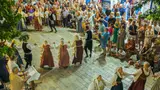
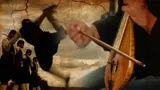
Panigiria in Chania are traditional saint's-day festivals - free, open-air celebrations in the villages of western Crete, where a feast turns into a night of Cretan lyra, rizitika songs, raki and dancing until dawn. What sets western Crete apart is the rizitika: the austere, monophonic "songs of the roots" sung in the foothills of the White Mountains and found nowhere else in Greece. The season climbs through July and August and peaks on 15 August, when the whole Apokoronas plateau and the mountain villages of Sfakia light up at once.
This guide maps the summer by date - which villages hold which feast, and what the night sounds like. For the live folk and traditional events Mood tracks across the area, you can browse the panigiria listed for Chania on Mood.
The Chania Panigiria Calendar 2026
25-26 July - Agia Paraskevi, Vamos
In Apokoronas, the village of Vamos keeps its name-day feast of Agia Paraskevi at the famous Pigadia springs, with traditional music and dancing on the evening of the 25th into the 26th. Proceeds go to local upkeep, and the spring-fed setting makes it one of the more distinctive village feasts of the early summer.
6 August - Metamorfosis (Transfiguration), Xirosterni
The Transfiguration, known across Crete as "Sotiras", is kept in Apokoronas at Xirosterni on the evening of the 5th into the 6th, with a Cretan kompania playing for the dancers - a quieter, well-loved feast before the August crowds arrive.
14-15 August - Dormition of the Virgin: the Apokoronas plateau
The Dormition - the "Easter of summer" - is the densest panigiri night of the year in Chania, and the Apokoronas plateau is its heartland. Villages including Litsarda, Fres, Pemonia, Alikambos and Kefalas all celebrate across the 14th and 15th, with lyra-and-laouto kompanies, pentozali and syrtos running until morning. It is the part of the prefecture where, on a single night, the dancing carries from one square to the next.
15 August - The Graviera Festival, Anopoli (Sfakia)
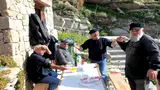
High in Sfakia, the village of Anopoli pairs the Dormition with its Graviera Festival, held since 1985 - a deep Sfakian glendi over a heavy communal table of boiled meat, pilafi, Sfakian stew, cheese, honey and wine, with live Cretan music. Sfakia keeps the most intense and best-preserved glenti tradition on the island, and this is its showcase night.
15 August - Chrysoskalitissa Monastery (Selino)
At the southwestern tip of Crete, the clifftop Monastery of Panagia Chrysoskalitissa - about five kilometres from Elafonissi beach - keeps a pilgrimage feast for the Dormition: a morning liturgy followed by a festive gathering, in one of the most dramatic settings of any Cretan panigiri.
Late August - The Sfakian Pie Festival, Chora Sfakion
Toward the end of August, Chora Sfakion holds its Sfakian Pie Festival by the new port - free tastings of the thin cheese-filled sfakiani pita with tsikoudia, live Cretan bands and dancing. The exact date is set each year by the local cultural association, so it is worth confirming locally before travelling.
What Makes Chania's Panigiria Different
Western Crete shares the island's lyra-and-laouto sound, but Chania's true signature is the rizitika - the monophonic "songs of the roots", named for the rizes, the foothills of the Lefka Ori (White Mountains). Sung in a strict, austere style, traditionally a cappella and by men, they split into "table songs" and "road songs", and they run through nearly every social occasion in the prefecture, from memorials to weddings to panigiria. The dances are pentozali, sousta and the Chaniotikos syrtos, and the Sfakian tradition is the most intense corner of all - a glendi over a heavy table that runs to sunrise. No other part of Greece has the rizitika, which is reason enough to treat a Chania feast as its own thing. For the wider summer picture, the Chania music events guide covers the concerts and town shows that run alongside the festivals.
Practical Guide - Before You Go
Rent a car for the mountain villages. The Apokoronas plateau, Sfakia and Selino are inland, with little or no late-night transport. Sfakia means winding mountain roads - not a first-time drive at 2am after raki.
Bring cash. Village squares, monasteries and pop-up festival tables rarely take cards; food, wine and tsikoudia are paid, or offered, in coins and small notes.
Embrace the late hours. A Cretan panigiri "starts" around nine but the lyra and dancing peak well after midnight and run to sunrise.
15 August is the big one, and it is crowded. The Apokoronas villages all light up on the 14th and 15th, and Sfakia fills to capacity - book accommodation weeks ahead and arrive early for parking.
Dress and manners: for monastery feasts such as Chrysoskalitissa, cover shoulders and knees for the liturgy; at village glentia, accepting the offered raki and food graciously is the courteous thing to do.
Find Folk and Traditional Music Events in Chania on Mood
Panigiria are free community feasts and rarely sit in ticketing databases, but the live Cretan music nights, folk evenings and laiko shows that run across the area in summer often do. Mood tracks what is on, so it is a way to fill the gaps between the saint's days. Browse everything happening in Chania on Mood to plan around the calendar above.
This summer's Cretan glentia
Beyond the village saint-panigiria, Mood now tracks close to 40 Cretan glentia and panigiria across the Chania region this summer - largely the live Cretan-music nights led by lyra and laouto. Named musicians tour the villages: Nikos Zoidakis plays on July 31, and Vasilis Skoulas with Manolis Alexakis on August 2.
The village feasts run alongside. New confirmed dates include a traditional Cretan panigiri at Mothiana on July 26, one at the harbour of Kalyves on July 25 and another in Kaina on July 26.
The Xerotigano Festival on August 1 adds a taste of the local sweet. Dekapentavgoustos brings two more food festivals: the Pilafi Festival at Galatas on August 14, and the Orange Festival at Skines on the 16th, with Nikos Zoidakis himself on the bill.
Frequently Asked Questions
What makes Chania's music different from the rest of Crete?
The rizitika - austere, monophonic "songs of the roots" from the White Mountains foothills, traditionally sung a cappella by men, almost exclusively in western Crete. No other part of Greece has them, and they run through the prefecture's panigiria alongside the lyra and laouto.
Are Chania panigiria free?
The celebration, music and dancing are free and open to all; you typically pay for food, wine and tsikoudia, and at some monastery and village feasts these are offered communally. Bring cash, as squares and mountain villages rarely take cards. You can check the panigiria listed for Chania on Mood.
Which part of Chania has the most authentic glendi?
Sfakia. Its festivals - the Anopoli Graviera Festival on 15 August, running since 1985, and the Sfakian Pie Festival in Chora Sfakion in late August - are known for heavy traditional tables and dancing until dawn.
When is the peak panigiri night in Chania?
15 August, the Dormition of the Virgin - the "Easter of summer". Dozens of villages with a chapel to Panagia celebrate on the 14th and 15th, with the densest cluster on the Apokoronas plateau.
From a rizitiko sung over a Sfakian table to a clifftop monastery above Elafonissi, the Chania summer is built around its feasts. To plan the music around them, browse live events in Chania on Mood.
Find events
browse the panigiria listed for Chania on Mood