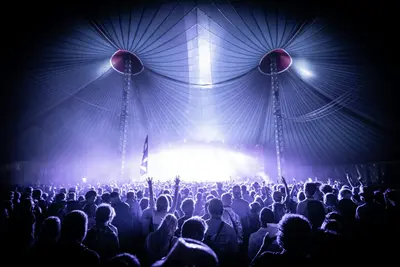
An Amsterdam student guide has to start with the housing market, because that number decides most of what happens after it. The University of Amsterdam (UvA) is spread across Roeterseiland in the city center and Science Park in the east, while Vrije Universiteit (VU) sits in the Zuidas district in the south, and neither school houses more than a fraction of its incoming class. Most students end up hunting the open rental market in Oost, Bos en Lommer, or De Pijp instead, alongside whatever DUWO - the housing association both universities work with - can offer that year. What follows is what that market currently looks like, what a GVB ride costs under this year's fares, and where the city's house and techno scene actually gives students something worth spending a Thursday night on. Mood, a live-event discovery platform, is tracking 790 live-music events across Amsterdam this month - enough to make the going-out half of student life easier than the apartment half.
Where Students Actually Live: UvA and VU Neighborhoods
General student housing prices in Amsterdam for 2026 land between €850 and €1,100 a month per room, though the range moves a lot by neighborhood and by whether the building comes with amenities (Investropa, pulled August 2026). DUWO, which manages the bulk of both UvA's and VU's official student housing, prices differently by building: basic rooms with a shared kitchen start around €350 a month, self-contained studios run €700 to €900, and a location like Eerste Ringdijkstraat lists rooms at €990 a month all-inclusive, covering gas, water, electricity, and internet (DUWO.nl, pulled August 2026).
Oost is where most students without a DUWO room end up, mainly because it costs less than the center and sits within cycling distance of both campuses. Bos en Lommer works the same way further west, where a studio currently averages around €1,115 a month, roughly €27 to €30 per square meter (Investropa, August 2026). De Pijp, by contrast, is one of the city's three most expensive districts this year, with full apartments running €2,200 to €3,500 a month - workable for a group of four splitting the cost, less so for one person alone.
Neither university can guarantee a room. UvA's own housing pool runs as a lottery, and this year's intake filled it completely, with no separate waiting list open. VU keeps a waiting list, but placement depends on current tenants cancelling, which is not something to plan a September move around. Students who start looking in March or April tend to do noticeably better than those who start in July.
Getting Around: What the OV-chipkaart Actually Costs
An anonymous OV-chipkaart card costs a €7.50 refundable deposit, and a single GVB ride on tram, bus, or metro runs €3.40 for an hour of travel. Riders who tap in and out all day rather than buying a pass are covered by GVB Max, a fare cap introduced this year that stops any single day of local transport from costing more than €10.50, no matter how many rides it takes (GVB fares, pulled August 2026). Full-time students enrolled at a Dutch institution qualify for a separate product entirely: the national studentenkaart, priced at €110.95 a month for 2026 and covering free or reduced-rate travel by train, bus, tram, and metro across the whole country, not just Amsterdam. It runs through DUO rather than GVB, and eligibility is handled through the university's own enrollment system.
Live Music on a Student Budget: Where Amsterdam's House and Techno Scene Actually Lives
Amsterdam's live-music calendar this month leans hard toward electronic music: the electronic tag alone appears on 311 of the 790 events Mood is tracking across the city in August, with house (266) and techno (138) close behind, well ahead of hip-hop (92) and jazz (99). That balance is not a one-week fluke - it is close to the city's baseline identity, and it means a student who wants a cheap, serious night out has more real options in house and techno than in almost anything else on the calendar.
Club Church, a smaller room built around techno and dance nights, carries 11 listings this month, and Mood rates the average night there at 0.83 on undergroundness - among the highest readings in the city's August data.
Radio Radio runs close behind at 0.81 across 14 listings this month, with a lineup split fairly evenly between house, tech house, and straight techno rather than committing to one lane. Neither room is the kind of venue that shows up on a first-week tourist list, which is roughly the point - a student who wants to skip the queue outside the big commercial clubs has somewhere specific to start looking instead.
Frequently Asked Questions
How much does student housing cost in Amsterdam?
Most student rooms rent for €850 to €1,100 a month as of 2026. DUWO, the housing association working with UvA and VU, prices lower for basic shared-kitchen rooms (from around €350) and higher for self-contained studios (€700 to €990), depending on the building.
What is the cheapest way to get around Amsterdam as a student?
A single GVB ride costs €3.40, and GVB Max caps any single day of local transport at €10.50. Full-time students at a Dutch institution can also apply for the national studentenkaart, which runs €110.95 a month and covers reduced or free travel by train, bus, tram, and metro nationwide.
Where can students find affordable live music in Amsterdam?
Smaller rooms tend to run cheaper and less crowded than the city's headline clubs. Club Church and Radio Radio both post consistently high undergroundness scores in Mood's August data, and Mood's techno listings for Amsterdam update daily with this same tier of night.
Is Amsterdam a good city for electronic music?
By the numbers, yes. Electronic tags appear on close to 40 percent of this month's 790 tracked listings in the city, with house and techno the two largest genres by count - ahead of hip-hop, jazz, and most other categories on the calendar.
Amsterdam's live-music calendar changes by the week. Browse upcoming events across Amsterdam on Mood to find what fits a student schedule and a student budget.