Manele is a Romanian popular-music genre built on Ottoman- and Balkan-derived vocal ornamentation, synthesizer orchestration, and lyrics centered on money, romance, and status, performed almost entirely by lăutari - professional musicians drawn overwhelmingly from Romania's Roma community. It outsells much of what plays on Romanian radio, dominates the country's wedding and private-party circuit, and still gets almost no serious English-language nightlife coverage, in Bucharest or anywhere else. That gap is strange given the scale involved: Mood's Bucharest listings currently carry nine separate manele headline bookings at Berăria H Herăstrău alone between September 3rd and October 17th, from Florin Salam to Nicolae Guță.
A Genre With Roots Longer Than Its Reputation
The word manea traces back to muzică orientală circulating in the Romanian principalities under Ottoman suzerainty in the late 18th and early 19th centuries, played by lăutari ensembles built around violin, accordion, double bass, and pan flute - the same instrumental lineage documented in RomArchive's survey of Balkan lăutărească traditions. The genre most Bucharest audiences recognize today is younger: it took shape in the 1980s as underground imitations of Turkish and Arabic pop, then broke into the open after the 1989 revolution, when decades of state censorship on "Oriental" music lifted almost overnight. Florin Salam, Nicolae Guță, and Adrian Minune built the genre's commercial peak through the 2000s and 2010s, turning wedding-circuit sets into arena-scale followings without ever getting meaningful radio rotation. A younger generation - Tzancă Uraganu, Jador, Dani Mocanu - has since pushed manele toward trap-adjacent production and a wider mainstream crossover, a shift outlets like Kaput Mag and POW Mag have tracked in some detail over the past few years. None of this happened in isolation from the rest of the Balkans: the same Ottoman-derived vocal scales and orchestration run through Bulgarian chalga, Serbian turbo-folk, and Greek laiko, which is part of why manele reads as instantly familiar to a regional ear and as an unclassifiable curiosity to almost everyone else.
What Sets Manele Apart: Popular, Not Underground, Still Contested
Manele isn't a marginal scene that happened to survive; it is arguably the most commercially dominant live-music genre in the country, and its stigma comes from precisely that visibility rather than from obscurity. Romania's educated and professional classes have long treated manele as vulgar and foreign to the national character - criticism that, as reporting from Electronic Beats and Cherwell has documented, tracks closely with the Roma origin of most manele performers rather than with the music on its own terms. In Mood's data, that commercial-not-underground identity shows up numerically: undergroundness never rises above 0.1 across the core lineup of manele and lăutărească bookings tracked in Bucharest right now, the lowest tier the platform records. This is a mainstream genre operating in the open, at scale, not a subculture waiting to be discovered - worth stating plainly, since most of what Mood covers elsewhere on the city's electronic and warehouse circuit sits at the opposite end of that same scale.
Where Bucharest Books It: Berăria H Herăstrău
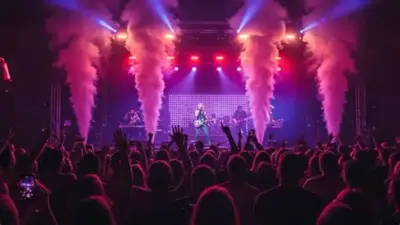
Almost all of that manele calendar routes through one venue. Berăria H Herăstrău, a beer garden and restaurant inside King Michael I Park, hosts the bulk of Bucharest's touring manele lineup this autumn: Vali Vijelie on September 3rd, Alex Botea on September 4th, Florin Salam on September 5th, Sorinel Puștiu on September 10th, Costel Biju on September 13th, Adrian Minune's 52nd-birthday anniversary show - with Vali Vijelie, Tzancă Uraganu, and Costel Biju returning as guests - on September 24th, Luis Gabriel the following night, Tzancă Uraganu on October 3rd, and Nicolae Guță on October 17th. Mood rates the venue's manele nights at an average of 0.8 on dining and just 0.2 on outdoor, a fingerprint that matches what Berăria H actually is: long shared tables and full dinner service built around the stage, not a standing club floor or an open field. The format explains the genre's live economics better than any lineup could - these shows function as an extension of a restaurant night out, priced and staffed accordingly, rather than a ticketed concert built around the artist alone.
The Other Bucharest Manele Circuit: Sala Palatului's Lăutărească Galas
A second, quieter circuit runs through Sala Palatului, the seated hall built for state congresses under communism and now Bucharest's default room for large-scale concerts. Its manele-adjacent programming skews toward the lăutărească and folk-heritage end of the same family tree: Nicolae Botgros and the Lăutarii National Orchestra headline both Comorile Neamului in March 2027 and Cant Cu Neamul Împreună in May 2027, while Radacini in October gathers Sofia Vicoveanca alongside a cast of veteran folk performers, and Acasă-i România follows two weeks later with Maria Ciobanu and Orchestra Moldovlaska. In Mood's data, these Sala Palatului galas average 0.85 on nostalgia, more than double the roughly 0.37 average across the nine contemporary manele bookings at Berăria H - a gap that maps almost exactly onto the difference between a legacy folk-orchestra tradition being honored in a formal hall and a present-tense commercial genre still adding new hits and new stars. Both trace back to the same lăutari lineage; only one of them still gets called manele without qualification.
Manele's current moment looks less like a fading wedding tradition than a genre finding new distribution. Tzancă Uraganu's catalogue routinely pulls millions of YouTube views per release, and producers working across the Balkan pop landscape have started borrowing manele's melodic and rhythmic vocabulary rather than treating it as a closed regional style. Bucharest's live calendar hasn't caught up to that shift in coverage terms - a search for "manele" on most English-language nightlife guides returns close to nothing - even as the genre keeps filling a beer garden in Herăstrău Park most weekends this autumn.
Finding Manele Events in Bucharest on Mood
Mood does not run a dedicated manele browse filter for Bucharest the way it does for techno or house, which is itself a small sign of how little infrastructure exists around the genre outside Romania. The full run of listed shows - Berăria H's beer-garden circuit and Sala Palatului's folk galas alike - sits inside Mood's Bucharest events page, alongside the city's rock, jazz, and electronic calendar.
Frequently Asked Questions
What is manele music?
Manele is a Romanian popular genre built on Ottoman- and Balkan-derived vocal ornamentation, synthesizer arrangement, and lyrics centered on money, love, and status, performed largely by lăutari musicians from Romania's Roma community. It emerged in its current form in the late 1980s and exploded after the 1989 revolution lifted censorship on "Oriental" music.
Why is manele controversial in Romania?
Romania's professional and educated classes have long dismissed manele as vulgar and un-Romanian, a criticism that overlaps heavily with the genre's Roma origins rather than with anything specific to the music itself. The controversy has run alongside the genre's popularity for decades rather than slowing it down.
Where can I see manele live in Bucharest?
Almost the entire touring manele calendar in Bucharest right now runs through Berăria H Herăstrău, a beer garden inside King Michael I Park that has booked Florin Salam, Nicolae Guță, Adrian Minune, and most of the genre's other headliners this autumn. The full schedule is listed on Mood's Bucharest events page.
Is manele the same as Romanian folk music?
No. Manele and muzică populară (Romanian folk) share lăutari roots but function as distinct genres: manele is a present-tense commercial genre built on new hits and touring stars, while the folk and lăutărească galas at venues like Sala Palatului lean on veteran orchestras and older repertoire, and read far higher on nostalgia in Mood's data.
Who are the most popular manele artists right now?
Florin Salam, Nicolae Guță, and Adrian Minune remain the genre's biggest established names, with decades of arena-scale followings built almost entirely outside radio and television. A younger generation - Tzancă Uraganu, Jador, and Dani Mocanu among them - has pushed the genre toward trap-adjacent production and a wider crossover audience over the past several years.
Browse the rest of Bucharest's live-music calendar on Mood - techno warehouses, lăutărească galas, and everything the wedding circuit doesn't advertise, all listed in one place.