Budapest, in Two Calendars
Budapest runs two largely separate live-music economies at once: a subsidized concert-and-opera circuit that books classical, orchestral and choral programming more than a year out, and a club-and-rock venue network that turns its calendar over week by week. Mood added Budapest to its catalogue in September 2026, and the app is currently tracking 2,217 upcoming music events across 238 venues in the city - enough range to describe both halves honestly instead of defaulting to whichever one a "best of Budapest" roundup usually picks. The full Budapest calendar is browsable on Mood, filterable by date, venue and genre.
The genre mix backs up the split. In Mood's data, 861 of the 2,217 listings carry a classical tag, ahead of folk (323), orchestral (311), chamber music (296) and opera (270). But the club-and-rock side is not a footnote: rock sits at 162 and electronic at 154, and - in a detail most Budapest guides skip past - Mood's catalogue shows jazz outnumbering both, with 233 tagged bookings split mainly between Budapest Jazz Club (63) and Opus Jazz Club (49). A city known internationally for the Hungarian State Opera and for A38's riverboat gigs also runs, by Mood's count, a jazz calendar deeper than its rock one, almost entirely off the tourist radar.
How the Split Formed
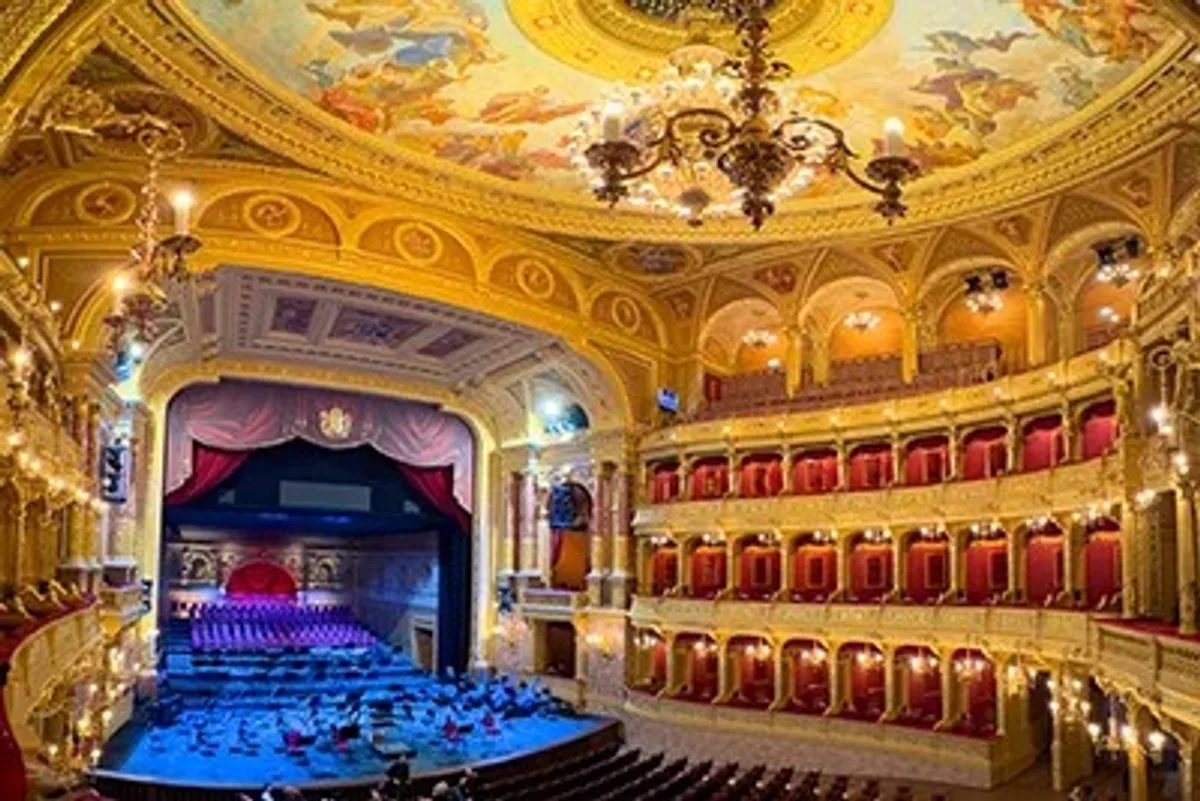
The two calendars are not a recent accident - they were built decades apart, by different money. The Hungarian State Opera opened on Andrássy Avenue in 1884, on land and funding secured partly by Emperor Franz Joseph I; the Liszt Academy, founded by Franz Liszt himself in 1875, moved into its current Art Nouveau building on Liszt Ferenc tér in 1907. Both are still state-subsidized, still programming a season and a half ahead, and Müpa Budapest - the newest of the three, opened in March 2005 as part of the Millennium City Center redevelopment on the Pest side of the river - joined that same funding model rather than breaking from it.
The club side has a shorter, scrappier history. A38 started life as a Ukrainian stone-carrier ship named Tripolie, built in 1968, towed to Budapest and rebuilt over a year and a half before opening on the Danube by Petőfi Bridge in April 2003. Akvárium Klub is newer still, opening in February 2012 in the space under Erzsébet tér previously occupied by the Gödör Club. Neither venue runs on public subsidy, and neither books a season in advance the way the institutional side does - which is part of why their calendars read as more genre-agile in Mood's data, picking up touring club and rock acts on shorter lead times.
The Institutional Half: Müpa, the Liszt Academy and the State Opera
Three venues carry most of Budapest's classical weight in Mood's data: Müpa Budapest (209 upcoming bookings), Zeneakadémia - the Liszt Academy (189) - and the Hungarian State Opera (103). Between them they account for roughly a quarter of everything on the city's calendar, and their programming reads as exactly what the names promise: Mood's feature scores put Müpa's average seating score at a full 1.0 and its organicness (acoustic-instrument weighting) at 0.886, both near the top of anything the app tracks in any market.
What the data does not confirm is the assumption that a seated, formal room automatically means a subdued one. The State Opera's recurring run of Orff's Carmina Burana, with a performance on 27 January, reads 0.7 on Mood's energy dimension - higher than the 0.655 average energy across Akvárium Klub's entire booking calendar, the venue with more upcoming listings than any other room coded as a club in the city. The most seated room in Budapest is, by this measure, hotter than the busiest club.
The Club Half: Akvárium, Dürer Kert and A38
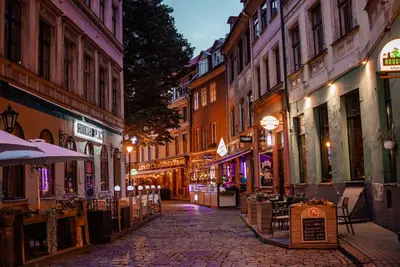
The other half of the identity runs through Akvárium Klub (101 upcoming bookings, the most of any club-coded venue), Dürer Kert (85) and A38, the converted ship moored on the Danube (71). Genre-wise this is where techno, house, hip hop, hardcore and metal live, and where Mood's undergroundness dimension - a read on how raw or scene-coded a booking is, independent of genre label - does its most useful work.
Akvárium Klub's own numbers make the case. Its acid-and-hard-techno night with Belocca reads just 0.2 on undergroundness - well under Dürer Kert's 0.695 average across its own 85 bookings. Akvárium is the venue with the deepest club-side calendar in the city, but the rawer programming, by Mood's data, runs through the smaller room near Kőbányai út, not the busiest one near Erzsébet tér. Genre labels alone would not tell you that; the enrichment scores do. Anyone tracking that side of the city specifically can browse techno events in Budapest on Mood directly.
The Venues That Sit in Between
Not every room picks a side. Budapest Music Center, opened in 2013 near the Danube in Ferencváros, runs jazz and contemporary classical through the same 60 upcoming bookings in Mood's data - a 320-seat hall built for chamber-scale acts rather than either opera-house grandeur or club-floor volume. House of Music Hungary, the glass-and-wood pavilion in City Park that opened as part of the Liget Budapest project, carries 49 bookings that read closer to the institutional side on Mood's polish score (0.658) while still booking electronic and world-music acts a club calendar would recognize. These rooms are a reminder that the two-calendar framing is a simplification useful for planning, not a hard border the city itself respects.
What This Means for Planning a Night Out
The practical upshot is that "Budapest live music" is not one search intent - it is at least two, and most existing guides only answer one of them. Sites built for classical listeners (Bachtrack, Classictic) do not mention Akvárium or Dürer Kert; sites built for nightlife (Offbeat Budapest, generic "things to do" roundups) rarely go deeper than a paragraph on the State Opera building's architecture. Mood's catalogue holds both sides in the same dataset, which is the more honest starting point for a city that genuinely runs both circuits at scale rather than one dressed up as the other.
That said, the data has a real limit worth naming rather than hiding: Budapest is new enough to Mood's app that interest signals (saves, follows) are still close to zero across the catalogue, so this guide leans on booking counts and enrichment scores rather than "most anticipated" rankings - those will mean something once local usage builds up.
Frequently Asked Questions
Is Budapest a good city for classical music?
Yes, by volume as much as reputation - Mood's data shows 861 upcoming events carrying a classical tag, spread mainly across Müpa Budapest, Zeneakadémia (the Liszt Academy) and the Hungarian State Opera, with programming already booked more than a year ahead at all three.
Where can I find techno and club nights in Budapest?
Akvárium Klub, Dürer Kert and A38 carry the bulk of the club-side calendar in Mood's data (101, 85 and 71 upcoming bookings respectively). Dürer Kert's bookings read rawer on Mood's undergroundness dimension on average than Akvárium's, despite Akvárium being the busier venue.
Does Budapest have a jazz scene?
A deeper one than its rock scene, at least by what is currently booked: in Mood's data, 233 upcoming events carry a jazz tag against 162 for rock, split mainly between Budapest Jazz Club and Opus Jazz Club.
How do I find upcoming concerts and club nights in Budapest?
The full, current list of upcoming Budapest events - classical, opera, jazz, rock and electronic alike - is browsable on Mood's Budapest page, filterable by date and genre.
Is Mood available for Budapest yet?
Yes - Budapest was added to Mood's live markets in September 2026, alongside Riga, Tallinn and Austin, with 2,217 upcoming events already tracked across 238 venues as of this guide.
Budapest's live-music identity does not resolve into a single line, and this guide has tried not to force one. Whichever half of the city is the reason to be there, the current listing is browsable on Mood's Budapest events page.